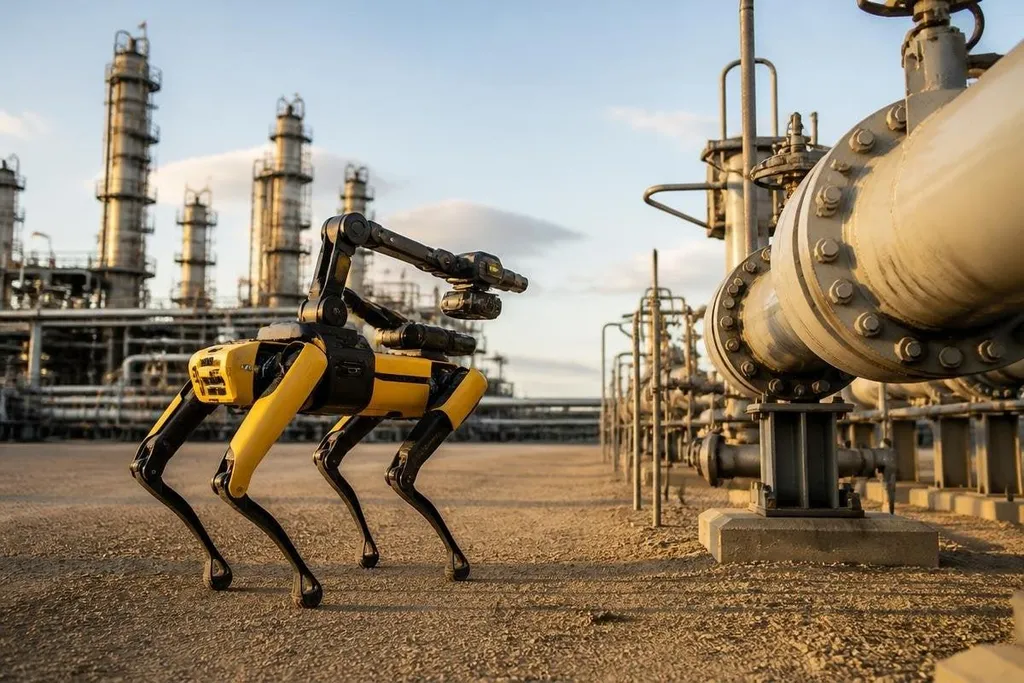
Energy robots are moving into work that is dirty, remote, hot, or unsafe for people. The strongest systems will be the ones that inspect equipment, carry useful tools, and keep working when a human operator cannot reach the site.
Quick read:
- Inspection robots use cameras, LiDAR, and thermal sensors to find faults.
- Maintenance robots need a stable grip, accurate motion, and a clear recovery plan.
- The best proof will come from repeated work at real energy sites.
Inspection beyond human reach
Inspection is the clearest use for autonomous systems in energy. The system can move through a pipe, climb a structure, travel across a solar field, or inspect equipment under water while sending images and sensor data to an operator.
The useful step is the connection between movement and evidence. A camera view may show a damaged surface, but thermal imaging can reveal a hot connection, and LiDAR can measure shape or distance. The robot needs to record where each finding happened so a technician can return to the same spot.
That places pressure on navigation. A system working near turbines, substations, or offshore structures may face poor light, wind, dust, water, metal surfaces, and weak communications. A route that works in a test area can fail when the robot loses its position or reaches a section without a clear path.
Maintenance is a harder test
Inspection creates a report. Maintenance has to change something.
A machine that tightens a fastener, cleans a panel, moves a valve, or handles a tool needs more than cameras and wheels. Its arm must reach the work area, its gripper must hold the object, and its control software must stop safely when the part moves in an unexpected way.
Teleoperation can help here. The operator handles the difficult decision, while the robot carries out small movements or keeps a tool steady. Over time, recorded tasks may help engineers build more autonomous behavior, but that progress needs measured results rather than a short video.
Energy sites also make recovery part of the job. A robot may lose power, slip, hit an obstacle, or lose its network link. The useful question is what happens next: does it stop in a safe place, return to a charging point, or wait for a human to take control?
Robots for damage and emergencies
Fire, leaks, flooding, and damaged infrastructure create work where access may be unsafe. Ground robots, aerial systems, and underwater vehicles can inspect the area before people enter, giving teams a view of heat, gas, water flow, or structural damage.
The machine has to fit the hazard. A flying robot may reach a high structure quickly, but wind can reduce flight time and make close inspection harder.
A ground robot may carry more sensors, yet rubble, stairs, and narrow passages can stop it. An underwater vehicle needs pressure-resistant hardware and a way to send data through water.
For energy work, the useful question is whether a robot completes a hard task under the conditions that matter. A turbine inspection system may spot a blade crack; a pipeline robot may map corrosion inside a pipe. The report needs the machine, site, date, sensor, and measured result. Reports from Robot 24 can keep those facts with the claim before the article defines what counts as a real breakthrough.
What counts as a real breakthrough
A new sensor or robot shape matters only if it changes the work. The proof should show the task, the operating conditions, and the result a site owner can check.
I'd watch the robots that reduce inspection time without reducing the quality of the record. A system that finds fewer faults, loses its location, or needs constant rescue may add work even if its demo looks smooth.
The strongest claims will answer four questions. Where did the robot work? What did it do without direct control? How often did it fail? What did the site team do with the data?
A buyer's checklist
Use these checks before treating an energy-robot announcement as a real step forward:
- Ask for the task record, including the site type, operating conditions, and number of completed runs.
- Check the sensor output, not only the video feed. A finding should include location, time, and supporting data.
- Find out how the robot handles lost communications, low battery, blocked routes, and damaged parts.
- Separate remote control from autonomous work. The difference affects staffing and operating cost.
- Check whether the robot can carry the tools, sensors, or protective hardware the job requires.
Energy robots will earn their place through repeat work, clear records, and safe recovery from faults. The next useful number won't be a launch claim; it will be how many inspections or repairs a system completes before a human has to step in.